
If you drive a modern vehicle, you’ve likely wondered: What should a car battery voltage be under normal conditions? This question becomes even more important if your car uses a car start‑stop battery, which works harder than a standard battery to handle repeated engine shutdowns and restarts. In this guide, we break down ideal voltage levels for everyday driving and explain why AGM Start‑stop batteries are the preferred choice for today’s efficient vehicles.
Ideal Voltage Ranges for Any 12V Car Battery
Most passenger cars run on a 12V electrical system, so voltage readings follow consistent ranges:
Engine Off (Resting): 12.6V – 12.8V (fully charged)
Engine Running (Charging): 13.5V – 14.7V
Cranking (Start‑Up): Briefly drops to 9.6V – 10.5V (still healthy)
These numbers apply whether you have a conventional battery or a high‑performance AGM battery for car applications.
Why Voltage Matters for a Car Start‑Stop Battery
A car start‑stop battery faces far more charge–discharge cycles than a traditional battery. The start‑stop system turns the engine off at red lights and restarts it instantly, putting constant stress on the battery.
If voltage stays too low:
Your engine may struggle to restart
Electronics like infotainment and safety systems can glitch
The battery lifespan shortens dramatically
This is why vehicles with start‑stop nearly always require a dedicated Start‑stop battery built for cycle life and quick recharging.
AGM Start‑Stop Batteries: Built for Stable Voltage
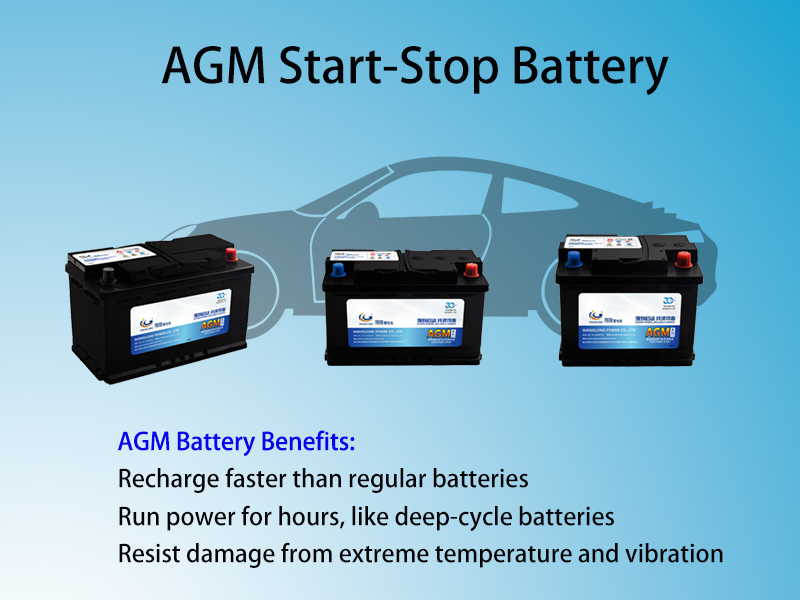
Among modern options, AGM Start‑stop batteries stand out for consistent voltage output and durability. AGM (Absorbent Glass Mat) technology delivers:
Faster charging to keep voltage in the ideal range
Better performance during frequent starts
Longer life under heavy cycling
If your vehicle specifies a 12V AGM car battery, replacing it with another AGM model preserves proper voltage regulation and system reliability.